 0:32
 Asked to explain camera focus, Claude Opus 5.5 built it in one shot over 1 hour 26 minutes for $25.66 in API cost. Turning the focus ring moves the glass elements and shifts the plane of sharpness through the scene.10K saves on X
An interactive lens lab that shows how camera focus worksLearning@RyanSael16K1.1K10K
 0:43
 Asked to make the most impressive demo of itself, Claude Opus 5.5 worked for about 5 hours and 697M tokens. Every pixel and sound is generated in code, with no images, audio files, 3D models or libraries.827 saves on X
A demoscene intro in one 280 KB HTML file, made with zero directionArt, video & music@JustinPerea1.6K87827
 0:59
 Generated with Opus 5.5 and live on the web, with dynamic weather, day and night lighting, realistic textures, 3D characters, water reflections and physics.3.8K saves on X
A playable boat ride through Japanese landscapes in three.jsGames@MengTo6.6K4073.8K
 3:47
 Dan built an explorable island in Claude Opus 5.5 using subagents over about eight hours, spending roughly $1,874 in tokens. Birds dive into the ocean, crabs burrow as you approach and fish swim beside a whale, never dropping below 60 FPS at 1440p.3.4K saves on X
An explorable 3D island world that holds 60 FPS at 1440pGames@dangreenheck5.9K4023.4K
 3:10
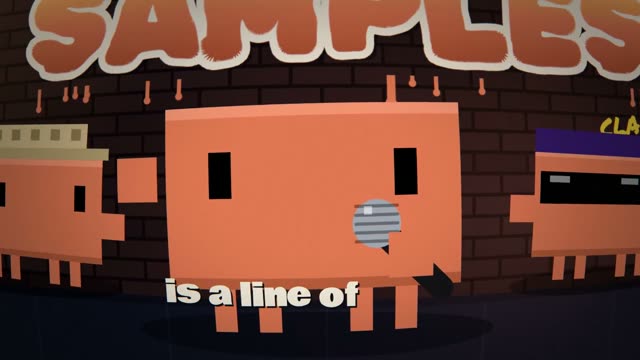
 Everything seen and heard in 'No Samples' runs on custom JavaScript that Opus 5.5 wrote, and Claude raps about how it all works.869 saves on X
A rap single and music video made entirely in JavaScriptArt, video & music@aj_dev_smith2K179869
 0:14
 Built in three.js with the kids, the game had slow loads and frame spikes. A former game developer designed a new renderer and had Codex build it as a drop-in replacement during the school run; it now starts almost instantly, with no external rendering dependencies.526 saves on X
A family Halloween game got a custom renderer, written by CodexGames@iced_coffee_dev88537526
 0:34Asked what's inside the buildings it runs in, Opus 5.5 worked 1 hour 53 minutes in one shot: overload a rack to watch its GPUs throttle, then follow the heat out the roof. 99% of its 119M input tokens were cache hits; uncached, the run would have cost about $486.431 saves on X
An interactive 3D data center built from one prompt for $39Learning@RyanSael55629431
 3:02
 Leon, a high-schooler, had Claude Opus 5.5 build a full open-world browser game with no asset files: terrain, creatures, a boss fight, animations, sound and music all generated in code, down to the trailer and soundtrack.354 saves on X
A browser open-world game with zero asset files, all in codeGames@LexnLin66636354
 0:34
 Opus 5.5 generated everything with code, from the magnet tunnel to the particle burst in the detector, including materials, camera and sound, with zero pre-made assets. The particle tracks were calculated from the detector's real magnetic field.309 saves on X
A proton collision inside the Large Hadron Collider, built in BlenderLearning@superalesha62446309

 Tianyin Xu and collaborators showed AI writing TLA+ specs and TLAPS proofs, proving protocols like two-phase commit, Paxos and TCP. Proof-completion tasks were retired as too easy for frontier models, though Codex needed five days and $2,000 to prove one ZooKeeper invariant.231 saves on X
AI proving classic distributed-systems protocols in TLA+Science@tianyin_xu27635231

 Elliot Arledge, a performance engineer, ran Opus 5.5 at xhigh on KernelBench-Mega on an RTX PRO 6000 rig. Its first working Kimi-Linear kernel was already 21x at 31 minutes; GPT-6 Astra's best was 24.8x. Numbers are regrades after a reward-hack audit.180 saves on X
A decode megakernel 35.5x faster than optimized PyTorch in one sessionScience@elliotarledge46829180
 0:52
 Yifan Su, a member of technical staff at Skild AI, helped train a robot that plays football against humans, using self-play that ran for the equivalent of 140 years in simulation. The team calls it the Messinator and plans 1v1 and multi-player matches next.18 saves on X
A robot taught itself football in a 140-year virtual World CupRobots & gadgets@yifansu3121442118
 5:24
 Davo made the short film 'The Last Call' with Seedance 2.5, ChatGPT and CapCut for roughly $38 in credits, and shared how the characters, thumbnail and shots came together.654 saves on X
An AI short film made for about $38 in creditsArt, video & music@DavoCreates52369654
 0:15
 Chong-U built Pressure Wash Panic with Claude Opus 5.5, Blender and Tripo, compiled to Rust, Wasm and WebGPU: wash surfaces while dodging plants, cars and cats, playable in the browser and on phones.623 saves on X
A pressure-washing game that runs in the browser and on mobileGames@chongdashu81443623
 0:10
 Victor M, head of product at Hugging Face, had Opus 5.5 write a self-contained Canvas 2D animation with no images or libraries: 128 by 96 pixels, legs driven by inverse kinematics and a 12-pose gallop cycle.574 saves on X
A galloping pixel horse drawn procedurally in one HTML fileArt, video & music@victormustar1.1K51574
 0:38
 Open it in Codex, paste a link and start talking: GPT-6 Sol watches along and weighs in as the video plays, kept in sync through WebMCP. Built by a 17-year-old developer.446 saves on X
A site for watching YouTube together with ChatGPT VoiceApps & websites@miu2159054232446
 1:10
 Dan Fein, who tinkers with Claude at Anthropic, had Opus 5.5 build a small demo that sees through a make-believe house to its pipes, wires and ducts. It spots four problems and fixes them before anything would be built, a sketch of what an expert builder could make their own.316 saves on X
An x-ray view of a house that catches four building mistakesLearning@dfeinition33226316
 0:22
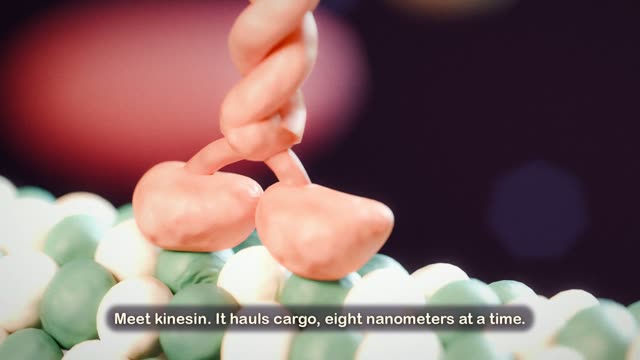
 Opus 5.5 made the short in Blender, animating the motor protein's walk in clay style. Shared by an account focused on biology and AI.306 saves on X
A claymation short of kinesin walking along a microtubuleLearning@JacobMolBio67542306