How do you train a Digital Hedge Fund analyst?
Well, I'm actually not sure. But I am experimenting. I am working on a project to build and train production-grade digital investment analysts for hedge funds.
As part of that process, I've been asking myself, "what are the characteristics & skills of a top 5% hedge fund analyst?"
And, how close can I get to replicating that skill set with agents? I'm not even sure this will work, and certainly LLMs out of the box are really poorly suited for this exercise (RLHF penalty / consensus by objective, hard to calibrate sycophancy and recency bias, incomplete training corpus relying on open web data, low quality data & research context, challenges with second and third order counterfactuals, absence of conviction under uncertainty...the list goes on an on). Not to mention the system design challenge of building this without spending $1m+ in tokens.
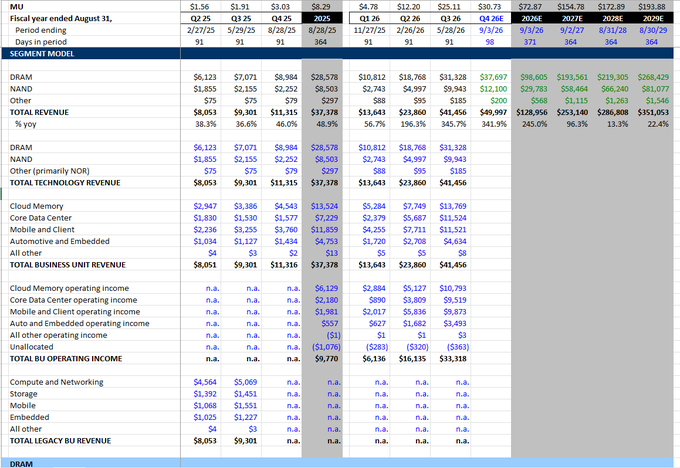
Clearly, a deep mastery of Excel is one of those skills, the ability to model out any situation (which is why I have been so excited about AI Excel recently). The modeling test is a cornerstone of nearly every hedge fund interview process. But more on that later.
But on a deeper level, the best analysts have experience. They have lived through multiple cycles, they have "seen this story before" scar tissue of a multitude of painful mistakes. Much of a trader's intuition stems from seeing similar patterns & set-ups multiple times before, and the best investors know when the pattern holds & when the pattern breaks.
This has always been a tough challenge for rising hedge fund analysts...how to synthesize years of experience when you have only been on the desk for 18 months.
I have been taking that thread of synthesizing experience and pulling it aggressively. How do you synthesize the public record to teach humans & agents?
To me, there are three layers:
1) General Education: For a student, this happens at
the University level. For an agent, this happens in the pre-training, SFT and RLHF/alignment phases. Both produce exceptional levels of intelligence, but not nearly sufficient to be a self-contained alpha generator.
2) Specialized / Applied Practice: the specifics of how the craft is practiced. What a doctor doesn't learn in med school, but has to learn in residency. This is what we do in the Analyst Academy (60 hours of curriculum for fundamental analysis that you don't get in a university curriculum). I have been working to convert Analyst Academy curriculum into a plug-in to address this pillar.
3) Sector Knowledge & Acculturation: "how it works in tech/healthcare/financials" and "how we do it here". The specifics of how a sector operates & trades, and the tribal knowledge of how a firm operates. Some of this can be observed externally (building a system to do this with 13Fs and other elements), but some of this has to be done internally (though armies of FDEs would love for hedge funds to sit down and share their highly proprietary process knowledge...)
There are so many elements of these three layers I could discuss.
But one of the amazing experiences in my career was working as a generalist for a few years and getting to spend time with various sector heads at my Tiger Cub, learning from their accumulated wisdom in that sector. While I could never replicate that specific knowledge, I have been attempting to recreate that same learning experience at a broad level. The sort of lived wisdom of 30+ years of living the tape, one day at a time.
A project I am calling "30 Years of Investing", starting with technology, where I have built a 180 page retrospective on what has worked (and not worked) over 30 years of technology investing. The report goes year by year and era by era, with the goal of teaching the human/agent the craft of technology investing by starting with the lessons of history.
Will this be perfect? Of course not. There may even be a bit of AI slop in here. And certainly some mistakes.
But I decided to share it. Mostly on the hopes that I will get some really thoughtful people reading it and giving me feedback on the errors and areas for improvement.
Consider this a version 1.0, and please give me any feedback on how to improve it.
Ultimately, my goal is to replicate this across sectors.
You can download the full PDF in the link in replies.
Work
A 180-page investing retrospective to train hedge fund AI analysts
Brett Caughran, a former hedge fund professional now adjunct at ASU, built a 180-page retrospective on technology investing to teach production-grade digital investment analysts, and shared it as a PDF for feedback.
201likes
15reposts
350saves
15Kviews
- Role
- Former hedge fund professional, adjunct at ASU
- Posted